. The jeweller's saw looks fragile: a light metal frame holding a blade as thin as a hair . Yet much of jewellery begins with it . Every outline cut from a sheet of silver, every opening pierced inside a shape, every clean separation of one part from another passes through this blade .
A blade like a thread
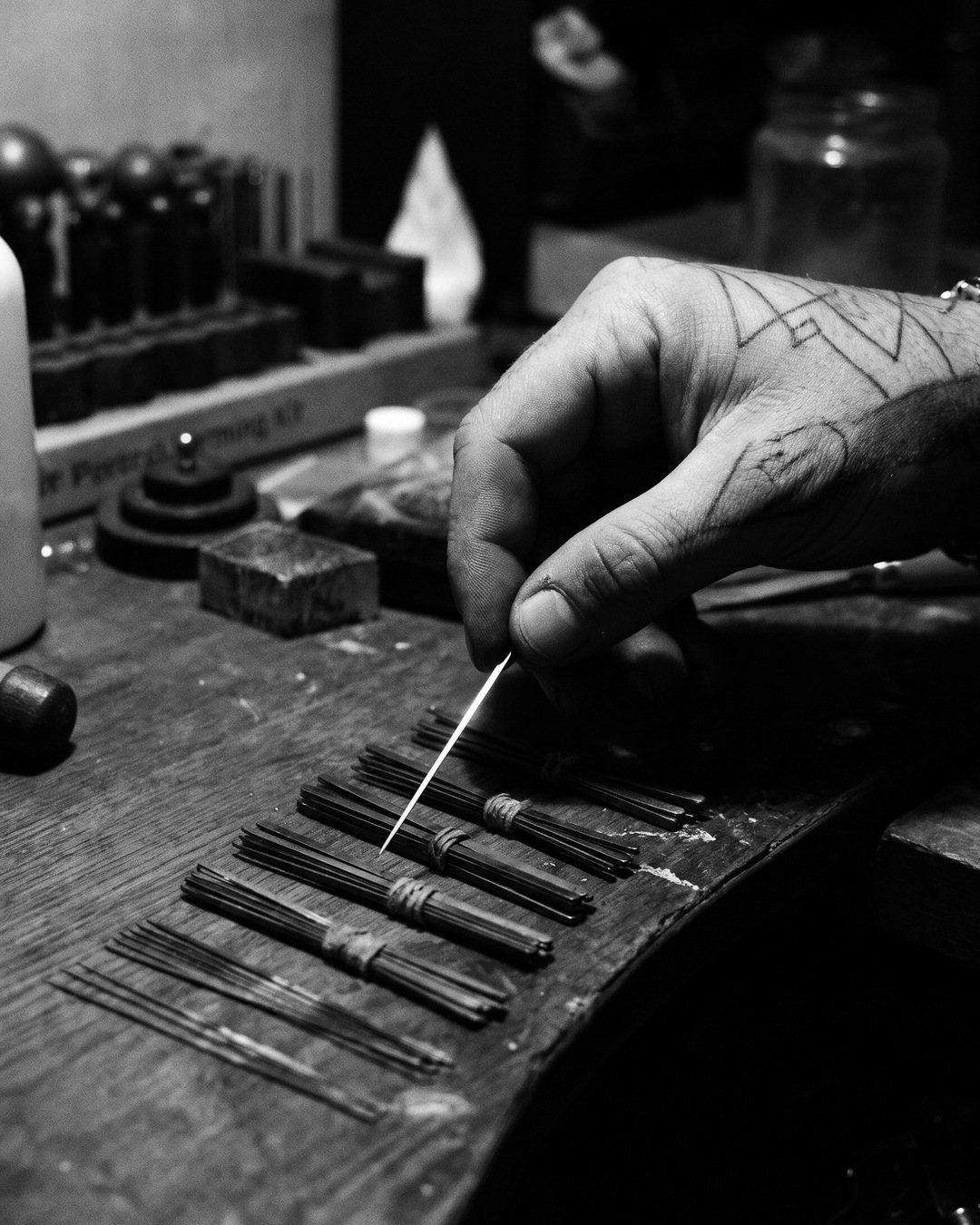
. Saw blades for jewellery come in many sizes, from very coarse ones with few teeth to blades so fine that they can barely be seen . Finer blades cut slowly and leave a clean line; coarser ones cut faster through thicker metal . A good rule is that at least two or three teeth should always touch the silver at once . Fewer, and the blade catches and snaps .
. The blade is stretched tight in the frame, teeth pointing down towards the handle, so that it cuts on the downward stroke . Tension matters . A loose blade wanders and breaks; a tight one sings a little when plucked . Many jewellers run the blade across a block of beeswax before sawing, so it moves smoothly through the metal .
Saw blades by number, from coarse to hair-thin
Cutting on the pin
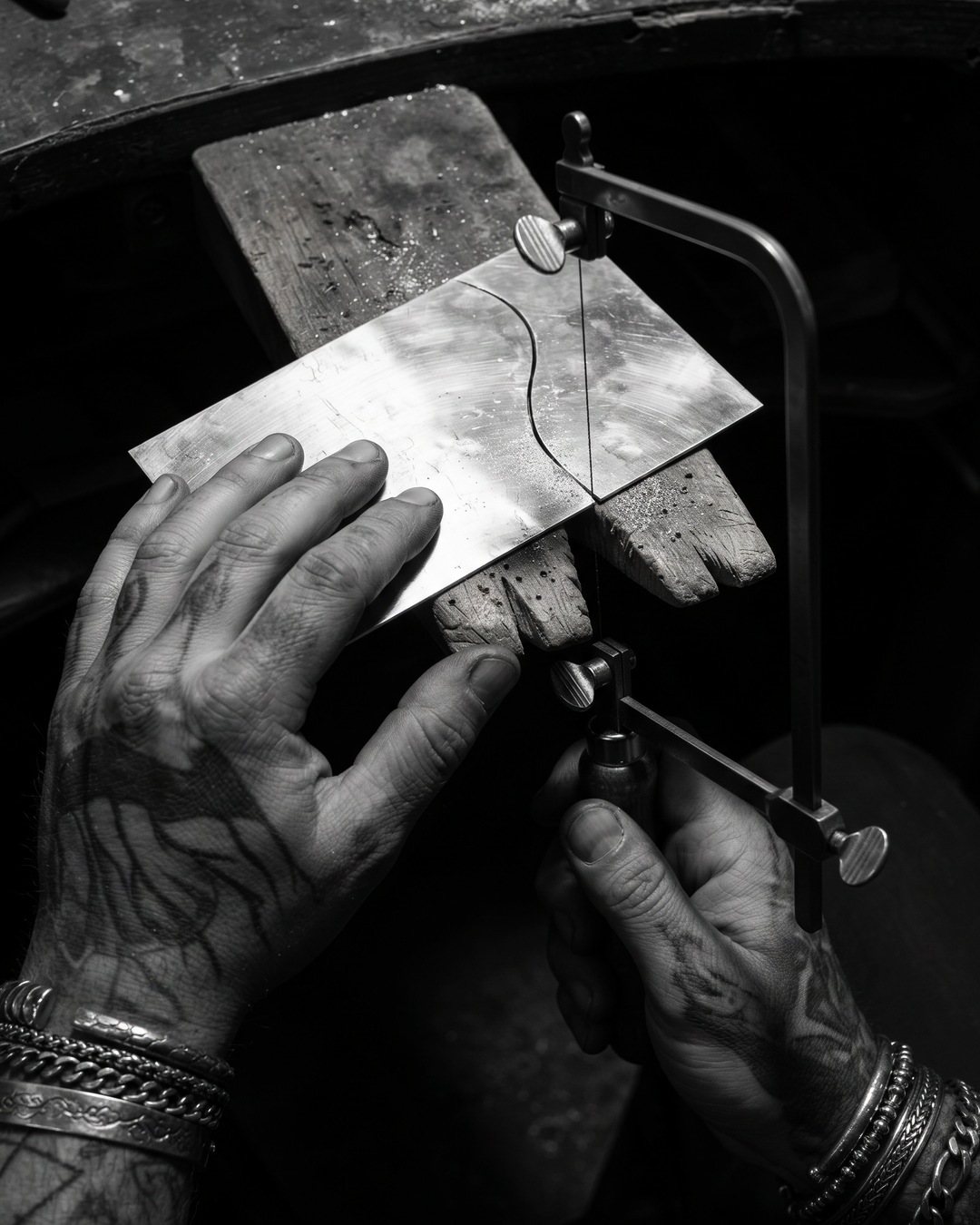
. The silver rests on the bench pin, over the V-shaped notch, and is held flat with the free hand . The saw moves straight up and down, in long, even strokes, using the whole length of the blade . The cut is not pushed forward; it is allowed to advance on its own . To turn a corner, the saw keeps moving up and down while the hand slowly rotates the metal, not the other way round .
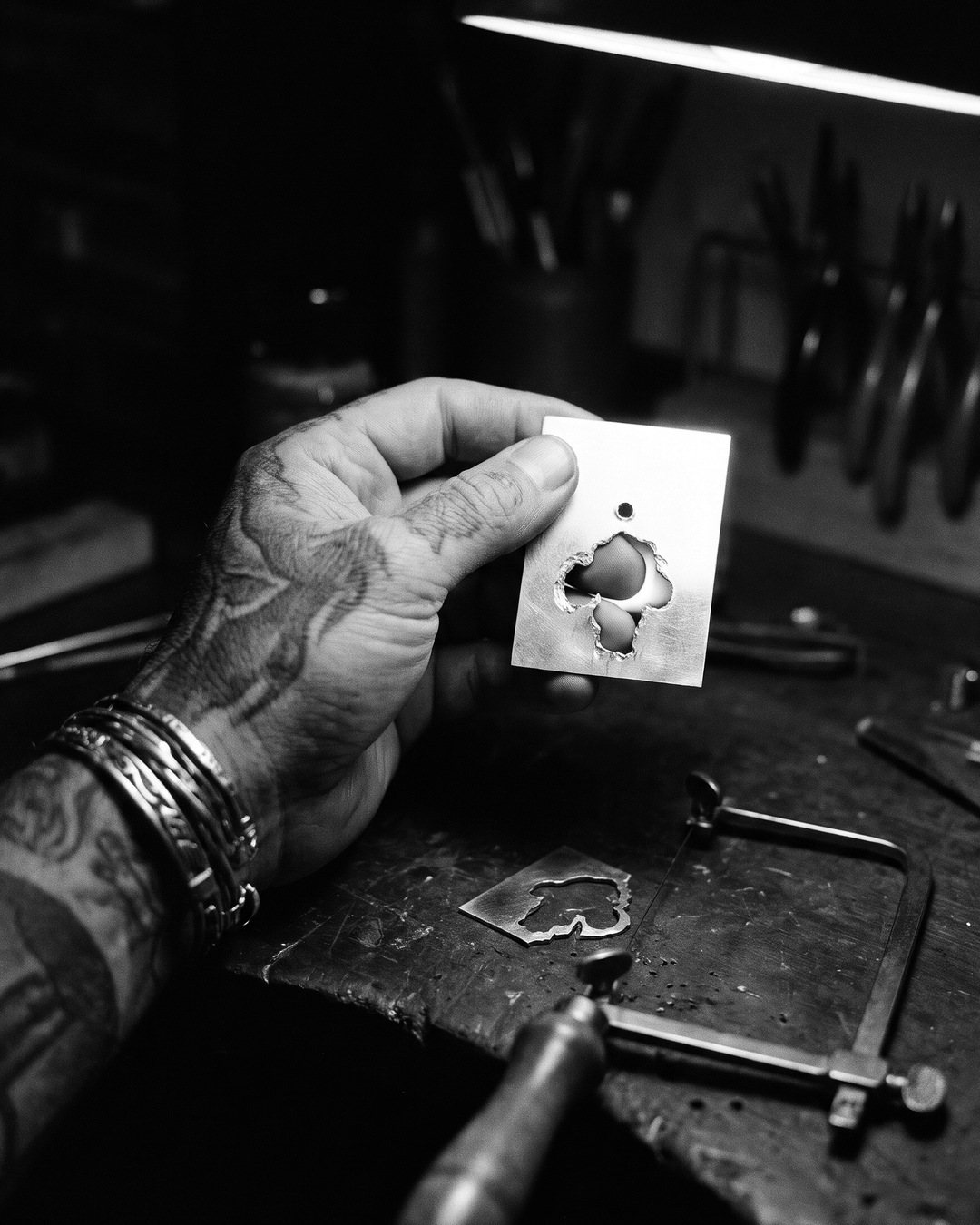
. To cut a shape inside a sheet — an eye in a face, a window in a wall — a tiny hole is drilled first, the blade is threaded through it and fixed in the frame again . Then the shape is cut from the inside out . It is slow, patient work, and the reason some of our pieces take far longer than their size suggests .
A hole drilled, a shape cut from the insideA good cut is not fast. It is the one that never has to be corrected.
Broken blades
. Every jeweller breaks blades — many of them . They snap when the hand twists, when the saw is forced, when attention drifts for a second . A broken blade is a small lesson about impatience . Experienced hands break fewer, but never none . Short pieces of broken blades are often kept and used again, because the frame can be shortened to hold them .
. In the photograph the saw is halfway through a sheet of silver . A thin line of dust falls below it into the drawer . That dust, too, will be collected . Nothing that leaves the silver is wasted .