. A ring begins as a straight strip of silver . To become a circle it needs two things: a cone of steel and a hammer .
Journal 15 · Atelier
. A ring begins as a straight strip of silver . To become a circle it needs two things: a cone of steel and a hammer .
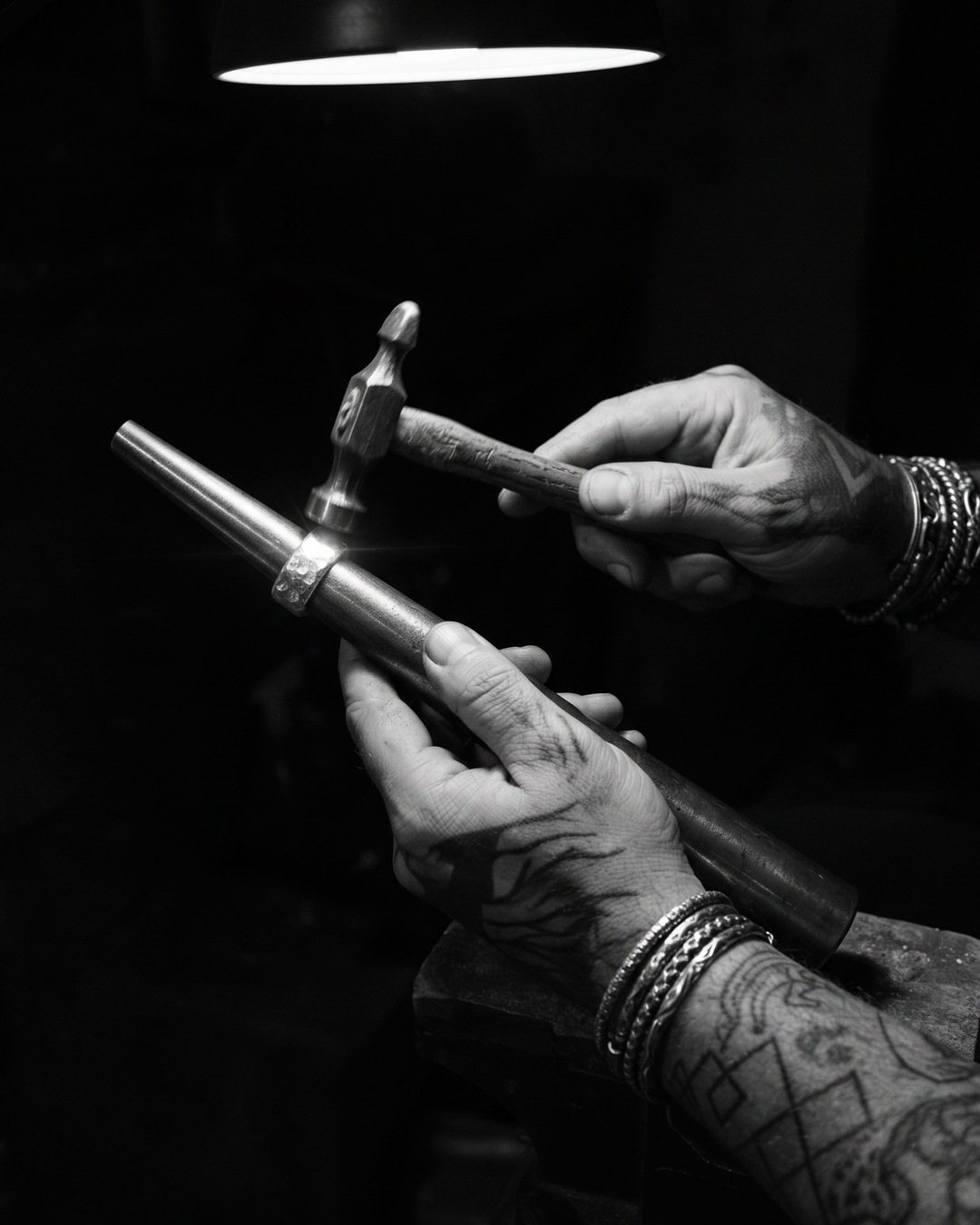
. The steel cone is called a ring mandrel . It is long, smooth and slightly tapered, often marked along its length with ring sizes . The silver is wrapped around it, closed, and then hammered while it sits on the steel . Each blow pushes the metal against the cone, rounding it out and making it true . Turn the ring, strike, turn again — and slowly a bent strip becomes a circle .
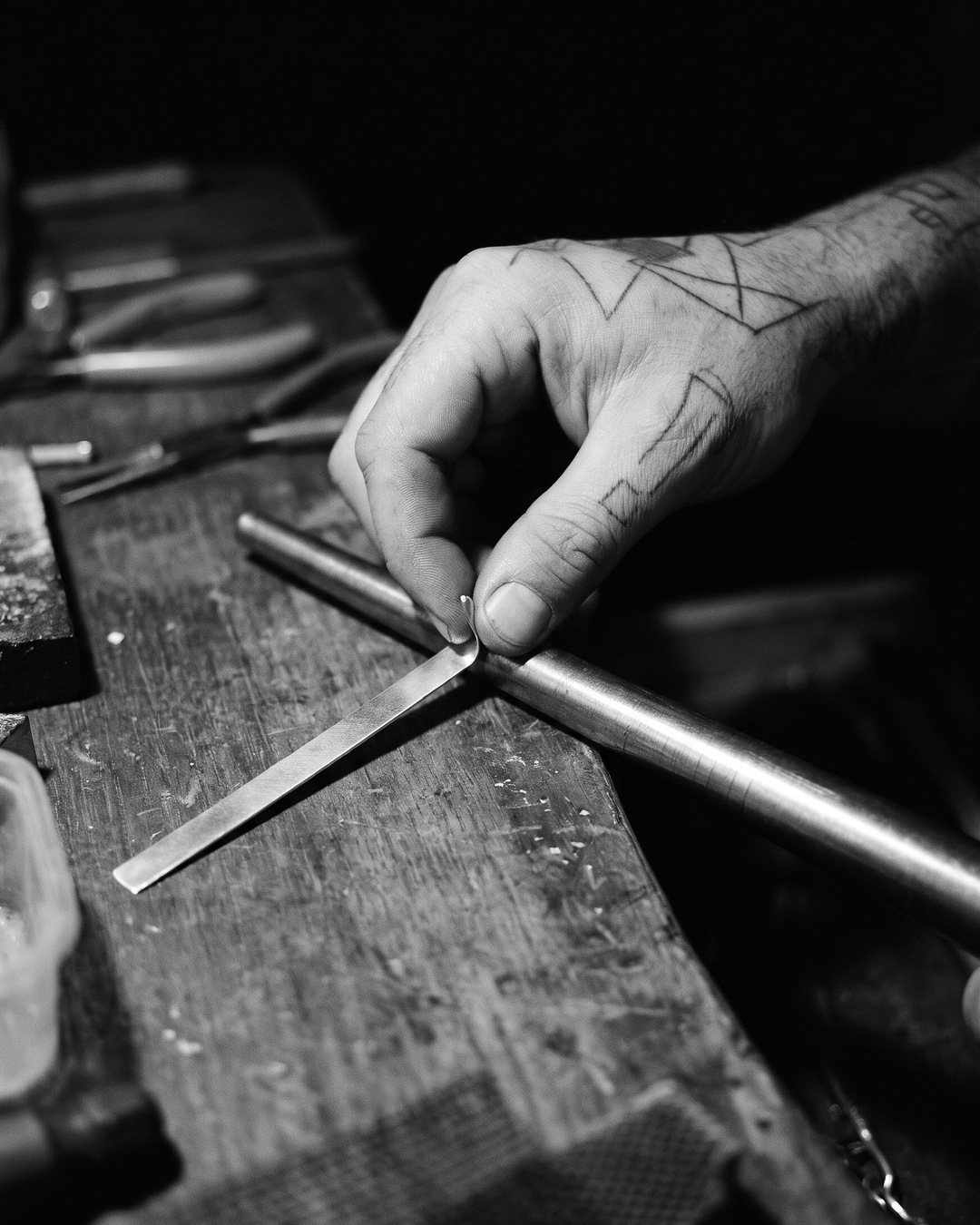
. Because the cone is tapered, every ring must be turned around and hammered from the other side as well; otherwise it would end up wider on one edge than on the other . It is one of the first things every jeweller learns, and one of the easiest to forget when the hands are tired .
. Hammering a ring on the mandrel does three things at once . It shapes the ring into a true circle . It hardens the metal, so the ring will hold its form on a finger for years . And, if the hammer is chosen for it, it leaves a surface: a soft mallet leaves the silver untouched, a polished steel face leaves small bright facets, a textured hammer leaves its own pattern of marks .
. The size can also be adjusted here . Hammering the ring further down the cone stretches it, a little at a time . Too much and the band becomes thin; too little and it will not fit . Every blow counts, and the hand learns to feel how much the metal has already given .
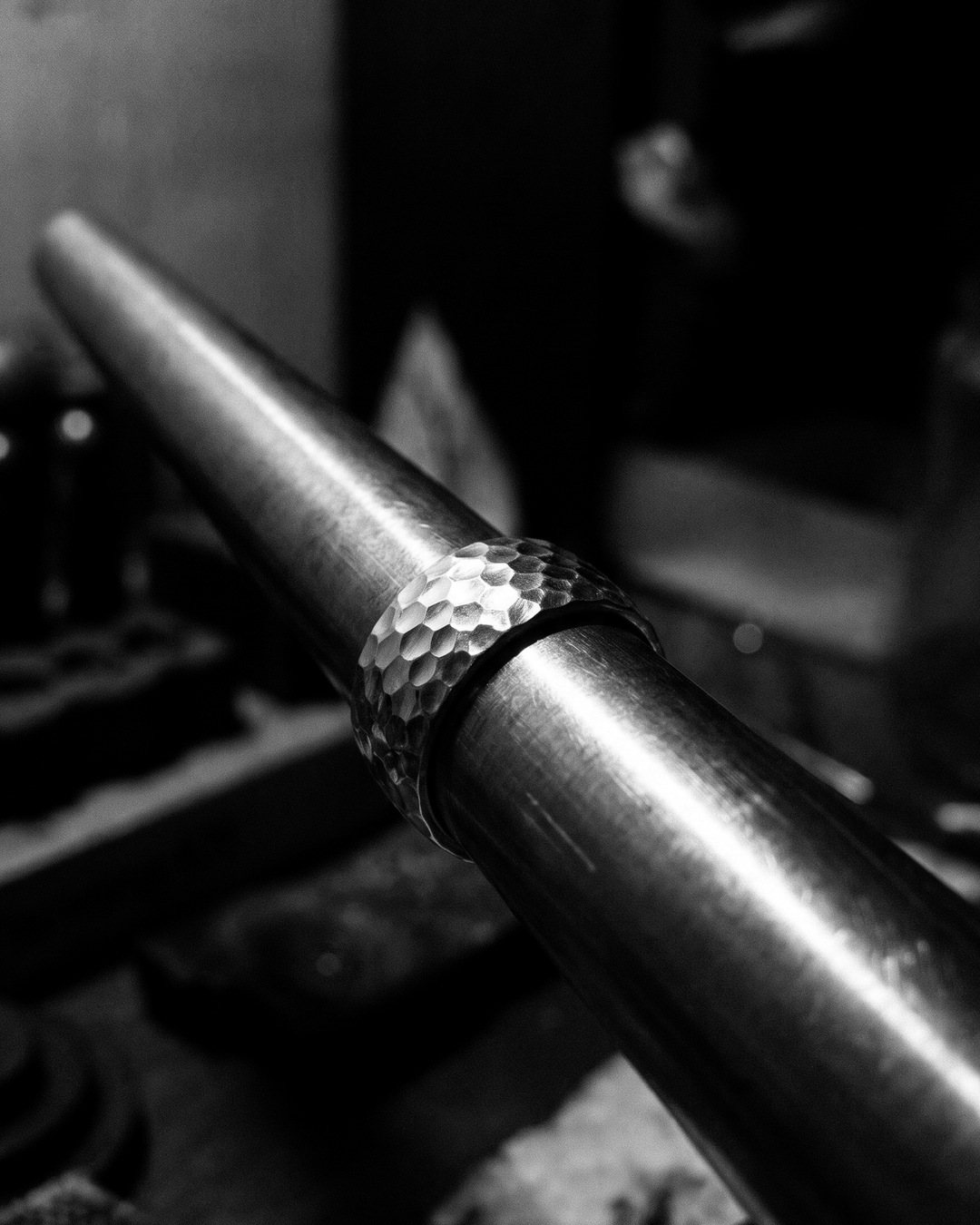
. The difference between a soft ring and a hammered one is not only felt; it can be measured . Softened sterling sits at around 60 on the Vickers hardness scale . After the metal has been compressed by half or more — by hammering, rolling or drawing — it can reach 140 to 180 . That is why a hammered ring holds its circle on a finger for years, while an unworked one slowly becomes oval . Each blow on the mandrel is both a shaping and a strengthening .
. In the photograph the hammer is caught at the moment of impact . There is a sound that comes with it — a short, clear ring of steel on silver on steel . Jewellers can tell by that sound alone whether the ring sits well on the cone or whether something is wrong . It is one of the many ways the workshop speaks, if you listen .