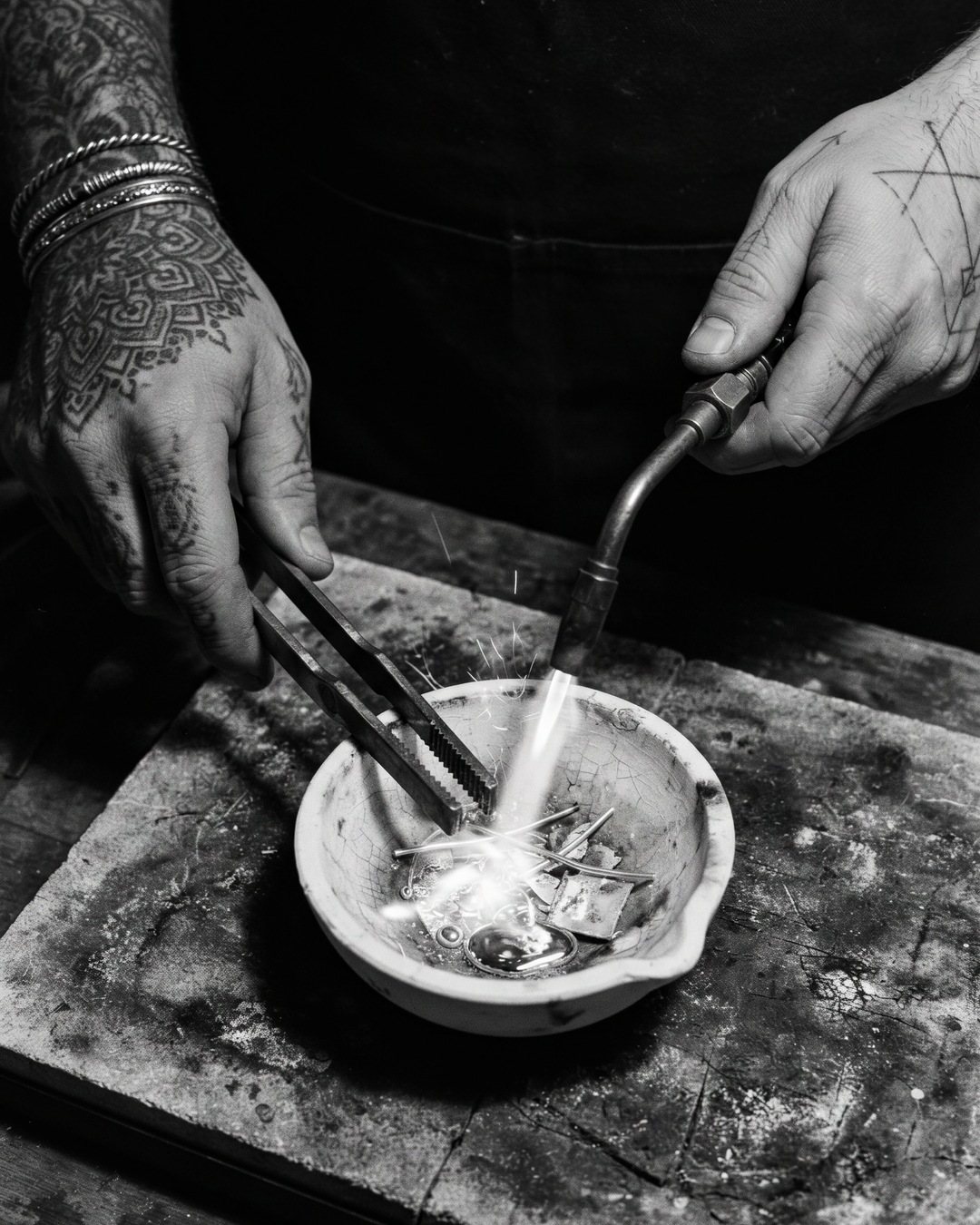
. Silver is a soft metal that becomes hard . Every time it is bent, hammered or pressed, its inner structure tightens and it starts to resist . Push it further and it cracks . The only way to give it back its softness is fire .
Journal 09 · Atelier
. Silver is a soft metal that becomes hard . Every time it is bent, hammered or pressed, its inner structure tightens and it starts to resist . Push it further and it cracks . The only way to give it back its softness is fire .
. Heating silver until it glows and then letting it cool resets the metal . Jewellers call it annealing . It is done again and again during the making of a single piece: shape, harden, heat, shape again . Without it, the metal would break long before it reached the form it was meant for .
. The best annealing is done in half-darkness . The temperature of silver is read by its colour, and the colour is subtle: a dull, deep pink that appears only for a moment . Too little and nothing changes . Too much and the surface starts to suffer . In bright daylight that pink is invisible . This is one of the reasons workshops are dark and lit by a single lamp: the eye has to see the fire, not the room .
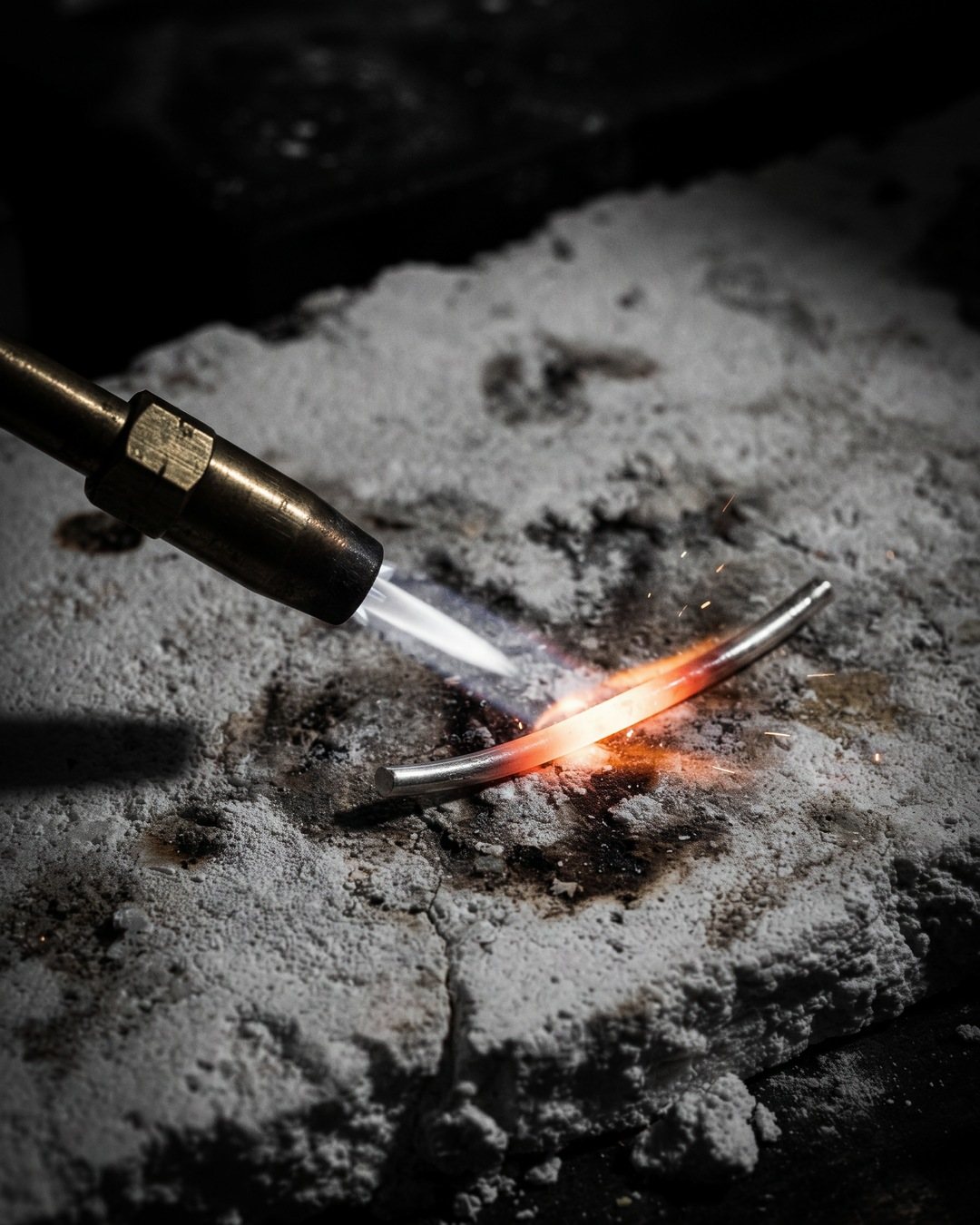
. A torch is not one fire but many . With more gas, the flame becomes soft, wide and bushy, gentle on the metal and good for warming a whole piece evenly . With more air or oxygen it becomes short, pointed and loud, very hot, but hard on silver: it darkens the surface and stains the metal beneath . Between them sits a calm, balanced flame with a clear blue cone . Learning to read and tune the flame is one of the first things a jeweller learns and one of the last things they stop learning .
. Under the piece lies a white board of heat-resistant material, scarred black by years of use . It reflects heat back into the silver and protects the wooden bench beneath . Some jewellers work on charcoal blocks, which glow with the flame and keep the air around the metal clean .
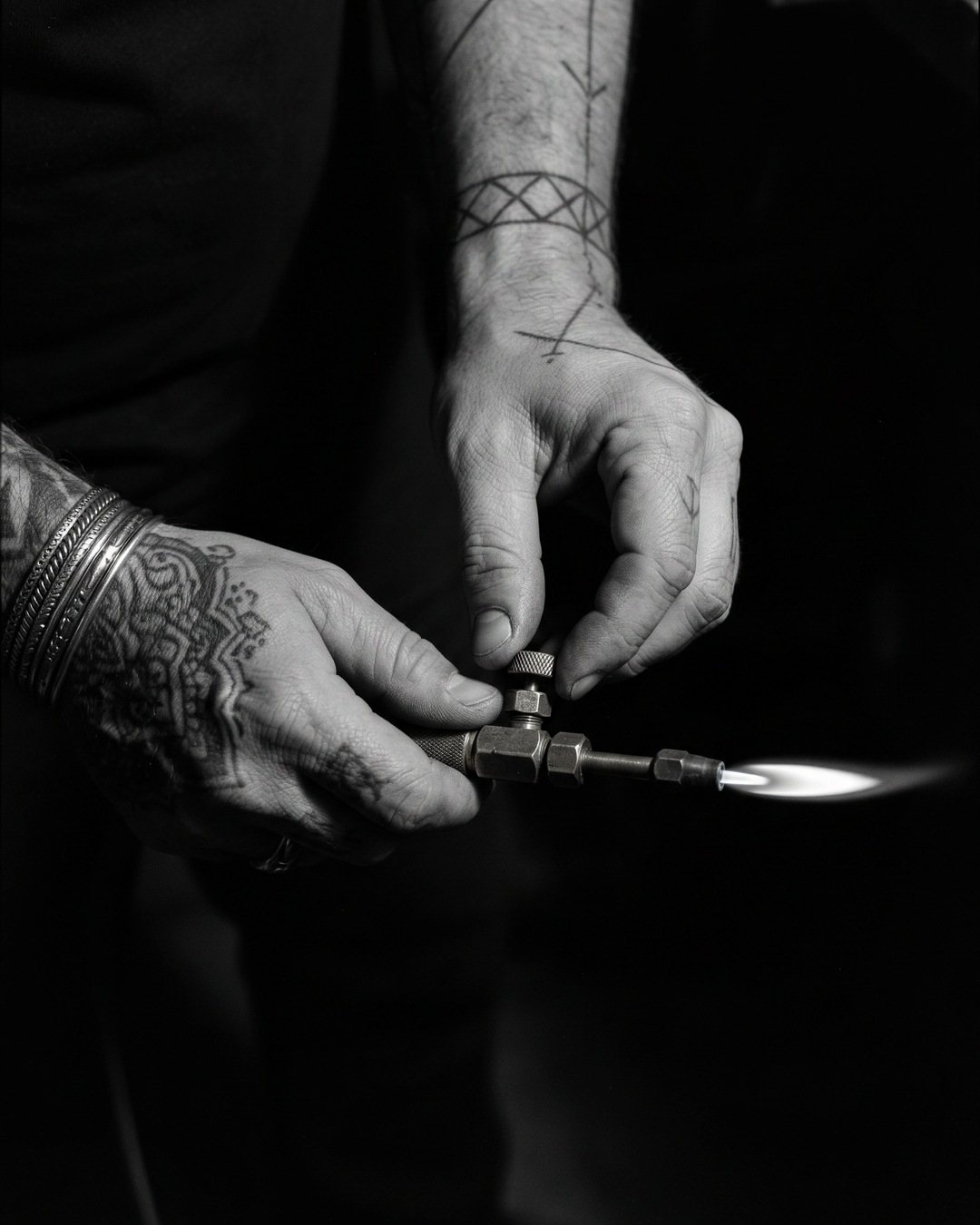
. There is nothing romantic about a torch in the hand . It demands attention every second: where the flame points, what lies behind the piece, how long the heat stays . Burns are part of every jeweller's history . Over time the hand learns to move the flame in slow circles, never staying in one place, the way a painter moves a brush across a whole canvas instead of one corner .
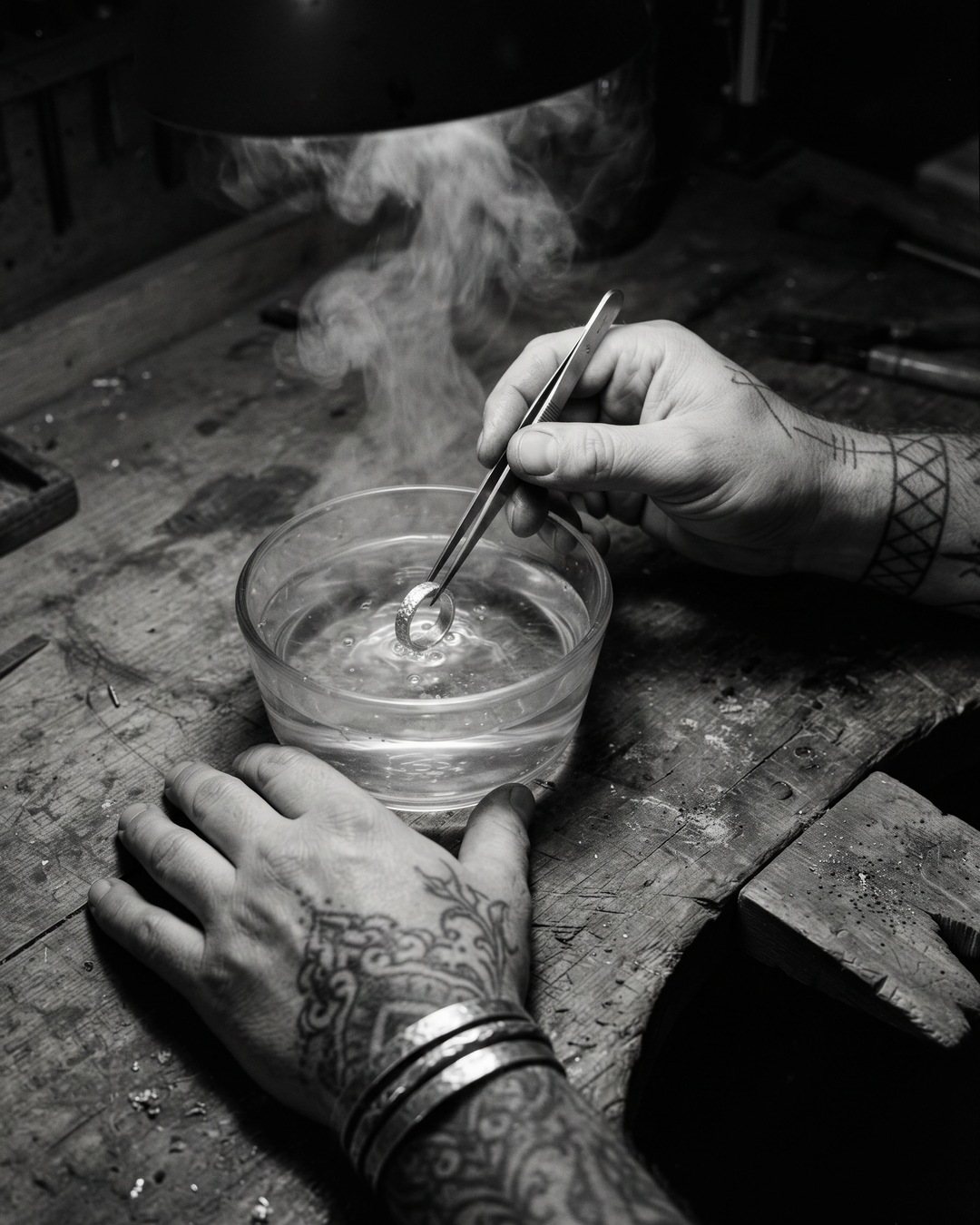
. The colour that the eye reads in the dark has numbers behind it . A first, barely visible red appears around 480 °C . The dull pink we look for when softening silver sits close to 650 °C . Deep cherry means about 760 °C — the temperature at which silver is prepared for hardening . Bright orange, near 870 °C, is already a warning: sterling begins to melt at 802 °C . Between the useful colour and the dangerous one there are only a few seconds and a few hundred degrees .
. The flame itself has temperatures too . A soft, gas-rich flame is cooler and kinder; it surrounds the piece and uses up the oxygen around it . A balanced flame has its hottest point just in front of its small blue cone . Knowing where that point is — one or two centimetres away from the nozzle — is the difference between warming a figure and losing its arm .
. In the photograph the silver sits on the white board, the flame licking it, the metal already glowing . It is one of the few moments in the making of a piece when nothing else can be done but wait and watch .